

I’ve been a daily email writer for seven years.
That’s more than 2,500 emails written. Probably somewhere around one million words.
But it’s time for a change. Daily email isn’t working for me anymore—and probably not for the reasons you think. I do still believe that daily email is a powerful way to build community and create engagement.
So why the change? Because this email-forward system is hiding my best insights behind a “paywall” where only an elite group can access them. If I want to have a bigger impact, reach a wider audience, and build relationships with more solopreneurs, I need to publish in public more than I publish in private.
Over the past few months, I’ve been paying close attention to how others in the online space work—especially those who serve a solopreneur audience—and one thing I’ve seen over and over again is a reshuffling of content priorities.
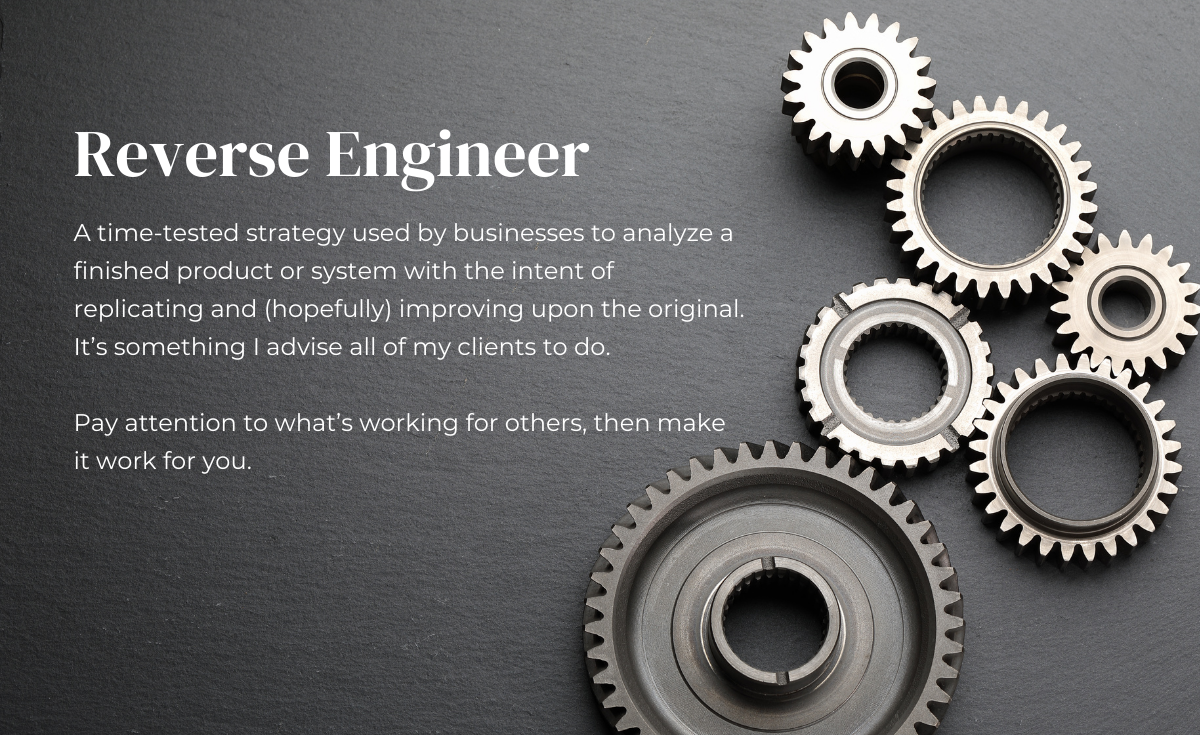
People I admire and trust are shifting from daily email to weekly, long-form newsletters, with supporting content published more frequently on social channels. I’m reverse engineering their success.
The Fundamentals
Back to my 2026 content publishing system. The core pieces are simple:
- Weekly blog post + newsletter
- Weekly YouTube (not yet launched, but watch for it)
- 3X weekly LinkedIn and Instagram (previously this was the daily email content)
Why LinkedIn and Instagram specifically? Because LinkedIn has the business/entrepreneurial audience I’m looking for, and because Instagram has the coaching audience I also want to reach.
YouTube, of course, has everyone.
So those are the parts I’m focused on this year. Let’s talk about what I’m trying to do, and how these pieces fit together in service of my goal.
The Goal
Bottom line: to build a bigger audience.
Most business owners, me included, don’t have a supply problem. You don’t have too many people on your waitlist and not enough hours or products to serve them.

Instead, you have a demand problem. There aren’t enough people clamoring for your services and products. The only fix for that is more visibility. There are a lot of ways to build visibility. You could choose to run ads, create strategic partnerships, rent billboard space in your city, write a book, or any number of other ideas.
I’m choosing content. It’s easy, I enjoy creating it, and it’s cost effective.
The Flywheel
Like any well-oiled system, my goal is to get more out of my content efforts than I put in. That’s another reason I chose the platforms I did. They’ll allow me to build a kind of flywheel that works harder as I apply pressure (publish more).
If you’re not familiar with the term, a flywheel is a mechanism that needs a lot of energy to start, but once it’s moving, it requires very little to keep it going. Think of a bicycle. When you first start peddling, it’s difficult and slow going. As you gain momentum, it gets easier. Pretty soon, the lightest touch will keep you moving, and a slight increase will make you go faster.
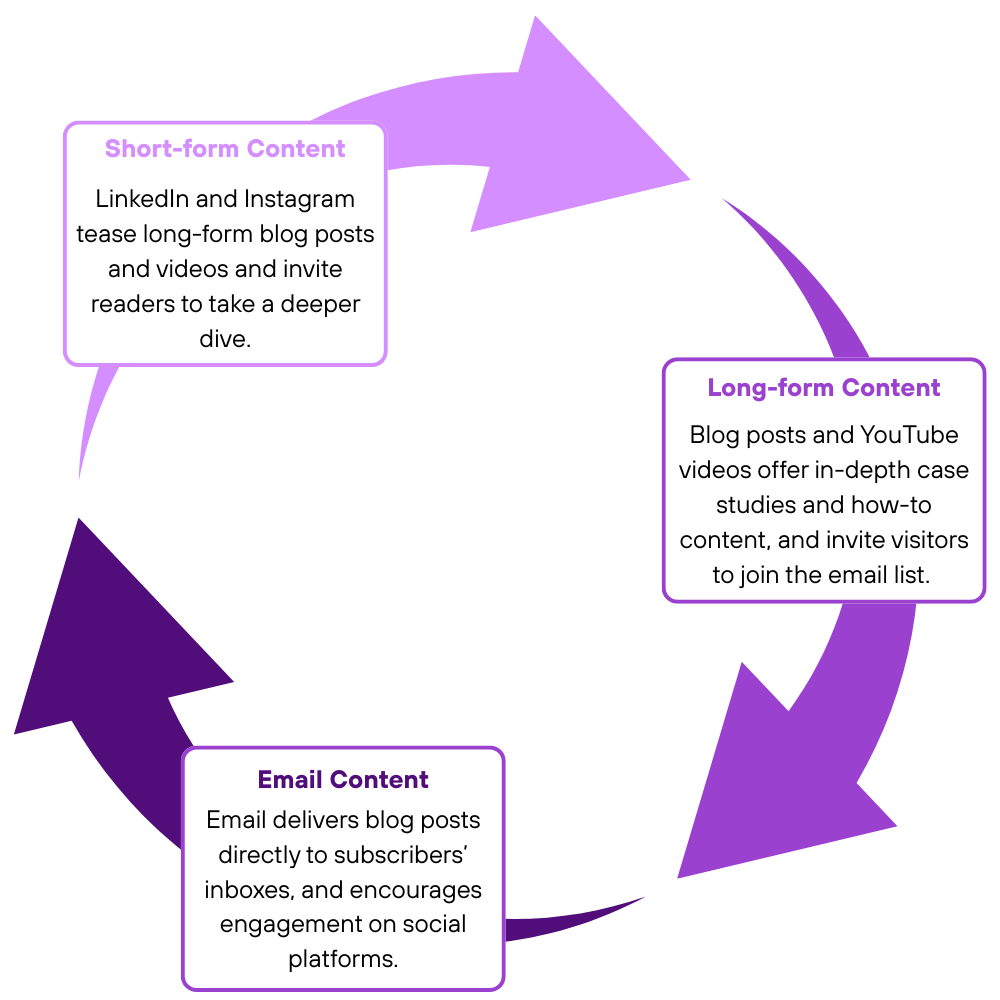
That’s a flywheel in the physical world. In the content publishing space, it looks like this:
- LinkedIn and Instagram act as teasers for long-form content on the blog and YouTube
- Blog posts and YouTube will invite email sign-ups and social sharing/commenting
- Social sharing and commenting helps to get my short-form content into more feeds
The Tools
The tools I’m using aren’t changing, but because I know some of you are going to ask, here’s my current publishing tech stack. As you can see, I keep it pretty bare bones.
I use an app called Ulysses for all my writing. This is a Mac-only app, but a similar tool for Windows is called Scrivener. I chose this tool because it keeps all of my writing in one app, instead of in scattered Word or Google documents. It also allows me to publish directly to my blog with the click of a button.
My blog runs on WordPress. Some people have asked why I’m not publishing long-form content on Substack or Medium, where there is a built-in audience. I did experiment with both of those platforms in the past few years, and while I think they have a place in some publishing flywheels, they’re not the right choice for me. I’m prioritizing brand authority, and that means publishing on my owned spaces whenever possible.
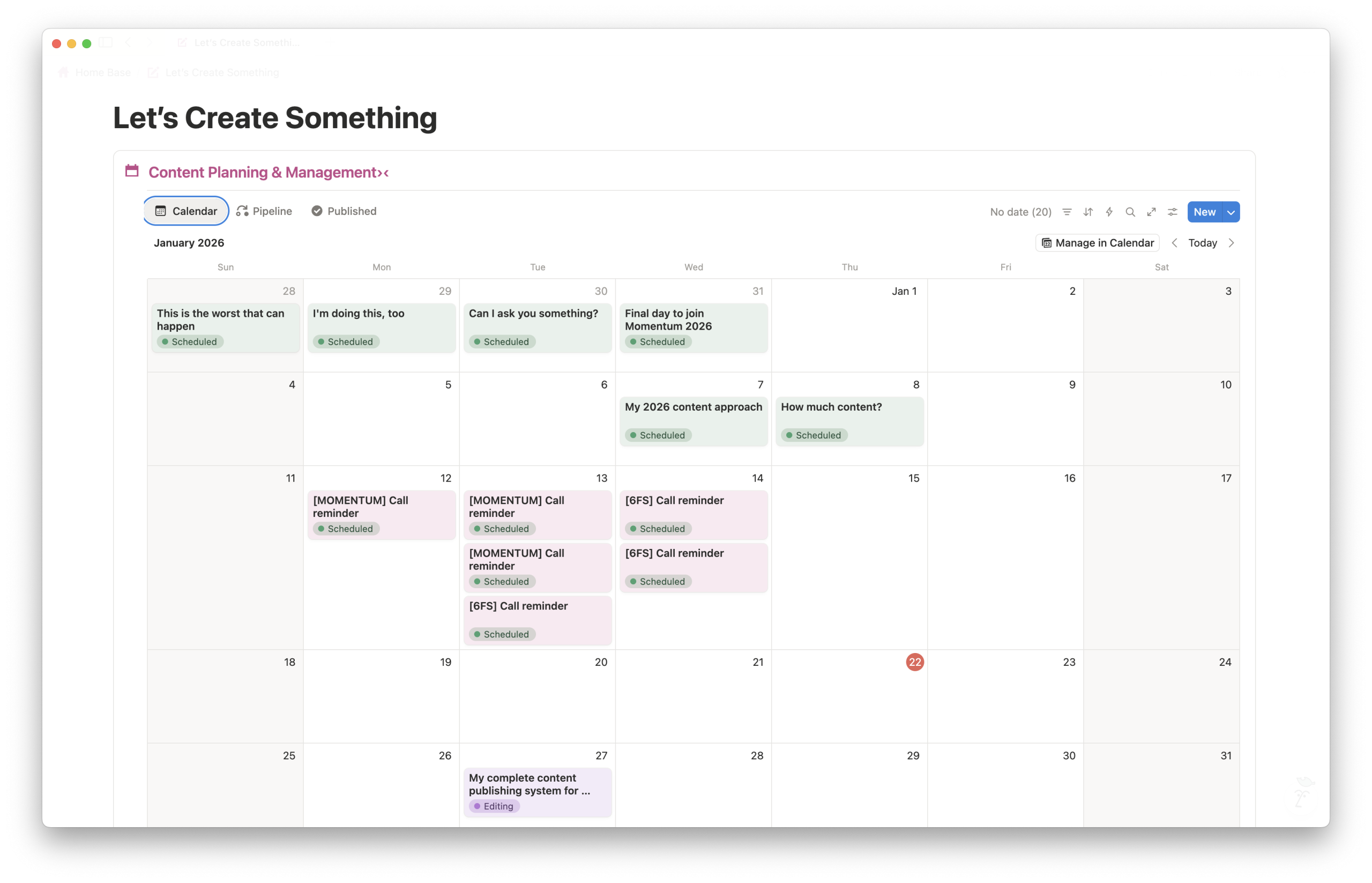
I use Notion for planning. I like this tool because it lets me easily create Kanban boards and calendars for tracking ideas, statuses, and publishing schedules. Previously I have used Trello and Airtable, and even Google Calendar, but I find Notion to be the best option for me.
Leave me a comment on LinkedIn if you’d like a full tutorial on how I’m using Notion in my business in 2026.
My email platform is Kit. It integrates well with all the other tools I use, and it’s so baked into my systems now I can’t imagine changing.
I create all my graphics in Canva.
I use LinkedIn’s and Instagram’s own tools for publishing. I don’t use AI repurposing tools, third party schedulers, or any other apps to help manage social media. I just don’t see the need for them.
The Process
As a fellow solopreneur, I know you have a lot on your plate. Everything, in fact. Every email, every support ticket, every strategic plan is all on you. It’s a lot, and we have to be focused and use our time well if we want to get it all done.
Here’s how I manage it:
I plan my content in 90-day sprints. That’s not new, it’s something I’ve done off-and-on forever. I start with the long-form content (this blog post, for example) and brainstorm 15 to 20 topics. That leaves me room to kill the ones that sounded great in the moment, but don’t hold up down the road.
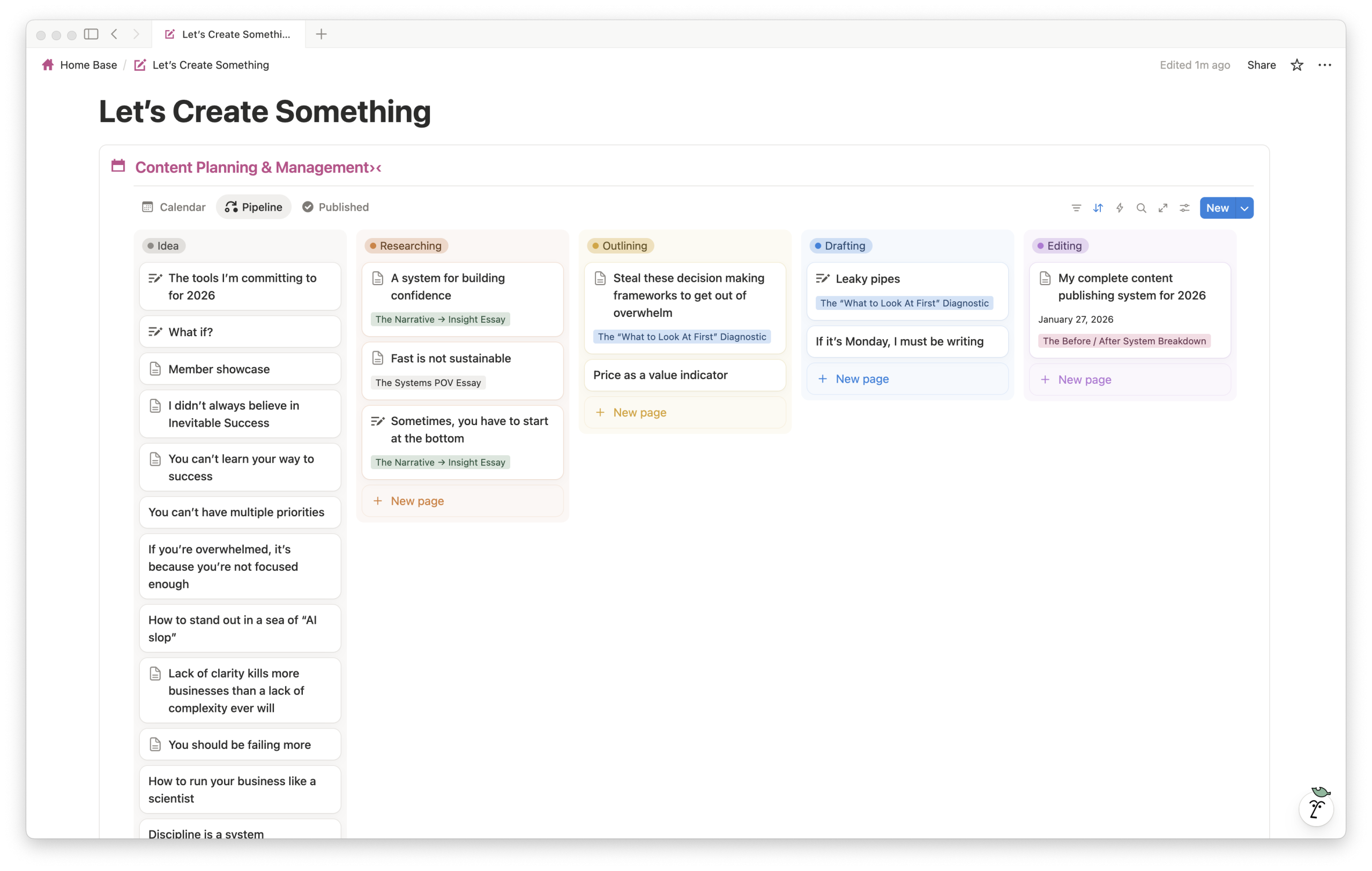
A critical part of this is keeping what I call an “idea garden” where I throw random ideas that come to me. You know when you’re reading an article or watching a movie and think, “Holy crap, that’s a great metaphor for business!”
I plant that stuff in my idea garden, and it’s there when I need something to share on my blog or on YouTube.
From there, I begin booking out my content calendar in Notion. There’s no real strategy here, and I don’t plan out all 90 days of content at once. I leave room for what I feel like creating to lead the way, I just don’t leave room for not feeling it at all.
Once I have the long-form content mapped out, I can fill in the blanks with short-form social posts. These are in support of the long-form content, so they’re easy to develop.
Because I like to batch my work, I tend to write everything at once. For example, it might take me a few days to write and edit a longer blog post like this, but the LinkedIn and Instagram posts that go with it will all be done in one sitting.
Batching keeps me from dragging out the process. It keeps me focused. And it prevents me from getting sucked into the apps. My content is scheduled, so I don’t need to be there.
Where Do Promos Fit?
Daily emails have one huge advantage over a weekly newsletter: There’s always room for a quick promo.
In fact, with a daily email cadence, I was able to map entire weeks to a single promotion, either for myself or an affiliate partner. Obviously, with a weekly schedule, I can’t do that.
I’m promising one email per week to new subscribers. That means if I suddenly show up with a daily inbox drop, they might get annoyed.
But that doesn’t mean I can’t ask for permission.
Here’s how it works. When I plan a promotion, I give it the full treatment. Daily emails, or even multiple emails in a single day just as the offer is expiring. The trick is to let people opt-out—not opt-out of my newsletter (they can already do that at the bottom of every email), but opt-out of that specific promotion.
This is one of the reasons I love Kit for email marketing. They make this kind of tag- and behavior-based automation easy. All I have to do is add a line to my email that says something like, “If you know for sure [the offer] isn’t for you, click here. You’ll still get your weekly dose of Systematic, but you’ll no longer receive emails about [the offer] during this promotion.”
Drop a comment on this LinkedIn thread if you’d like to see a full tutorial on selective opt-outs using tags.
The Experimental Nature of Business
You might have noticed that some of this has yet to be implemented. In fact, I’m kind of planning as I write this, and that’s OK. Business (and life, too) is just one experiment after another to see what brings you the results you want.
That’s a core philosophy in everything I teach, and it’s at the heart of Systems for Solopreneurs and Six-Figure Systems.
Whatever your goal—more clients, chewier chocolate chip cookies, better click-through rates on YouTube—the way to achieve it is to design an experiment, implement the process, and see what happens.
I’ll keep you posted on my results, and if you’re craving a “daily dose of Cindy” and you’re already missing our daily email chats, then head over to LinkedIn or Instagram and connect with me there.
In the meantime, if you need some help deciding what to focus on next to grow your business, grab my free worksheet below. It will help you diagnose the systems that are underperforming and prioritize the projects that will have a real impact on your bottom line.



Thank You for all your information. You are appreciated. I always wondered about sernding daily emails. Too many people do not have the quality of content to produce/send daily. Better to add all in one. I follow this one person Friday Freebies…info and free quality gifts. TGIF Happy 2026 is it too late to say that? Ok, saying for a friend. Haha! P.S. I am a Member. 🙂