

Knitters might recognize these terms:
- Startitis (being distracted by something new before finishing the current project)
- UFOs (unfinished objects, particularly those that have taken a back seat due to startitis)
- SABLE (stash acquired beyond life expectancy, which—when mixed with a dash of startitis—leads to UFOs)
You’re not out of line if you’re sensing a similarity between knitters and solopreneurs. In the entrepreneurial world, we use the phrase “shiny object” to describe all sorts of distractions:
- New tools and AI hacks that promise to solve all your problems.
- Passion projects that tug at your attention and keep you from gaining ground on what really matters.
- The domain collection that continues to expand (you know, for all of those passion projects).
Where’s the harm?
In my knitting stash you’ll find two unfinished scarves, one unfinished blanket, a sweater that’s 75% complete, and numerous unmatched socks. (Single sock syndrome is its own category of UFOs that knitters know all too well.)
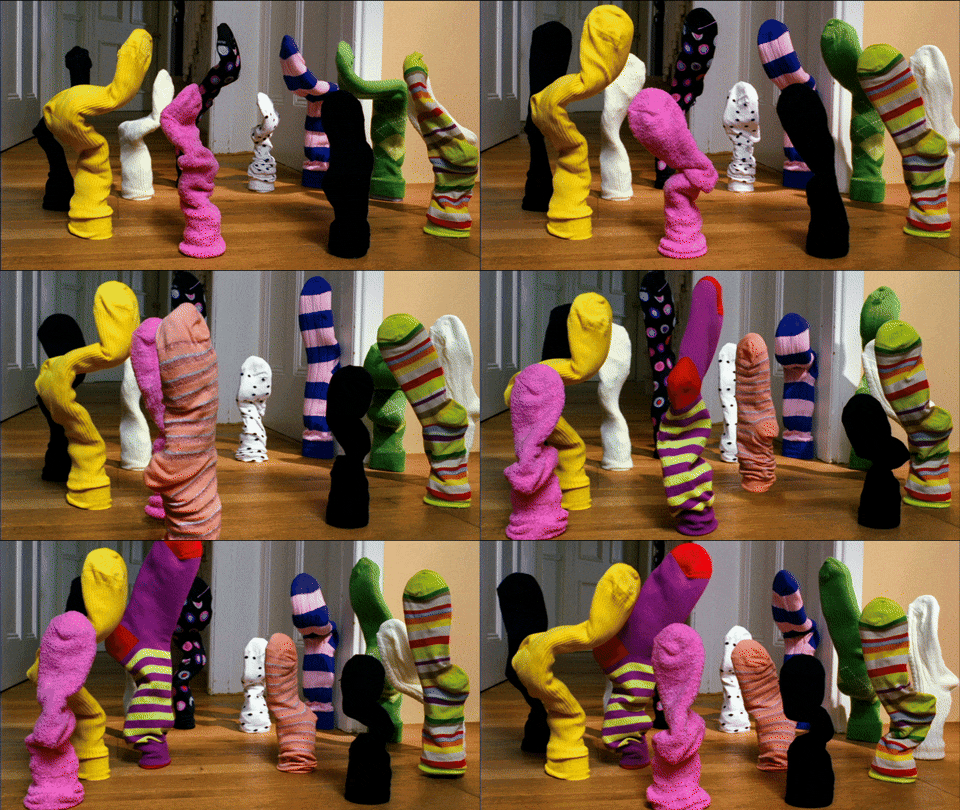
And you know what? None of that matters. No one cares that I finish the sweater I started back in 2009 (yes, 17 years ago). I do feel a vague sense of guilt when I stumble upon my UFO collection, but I don’t spend a lot of time or energy worrying about them.
For entrepreneurs, it’s not as easy as shutting the closet door.
Shiny objects can actively get in the way of achieving your goals.
- Changing email platforms to save a few bucks or to gain access to a feature that sounds amazing, but that you don’t need and won’t use is a waste of time and energy. Instead, put that effort into promoting your existing mailing list.
- Shopping for new course and membership apps when you haven’t yet finished, promoted, or sold your course is a distraction you cannot afford. Spend that energy building, rather than researching.
- Buying another course because someone convinced you that the only thing standing between you and success is their hot new strategy.
How a shiny object wasted my time this week
I’ve used Camtasia for video editing for years. It’s not the shiniest app in the video editing space, but I know how it works, I understand its quirks, and I already own it. So those are plusses.
But my YouTube experience had me on the hunt for something flashier, with better editing tools. After watching a few videosand testing out several options, I landed on Capcut.
It doesn’t have the power of something like DaVinci Resolve or Adobe Premier Pro, but it also doesn’t have quite as steep of a learning curve. I was able to download it, import my video footage, and start editing within a few minutes.
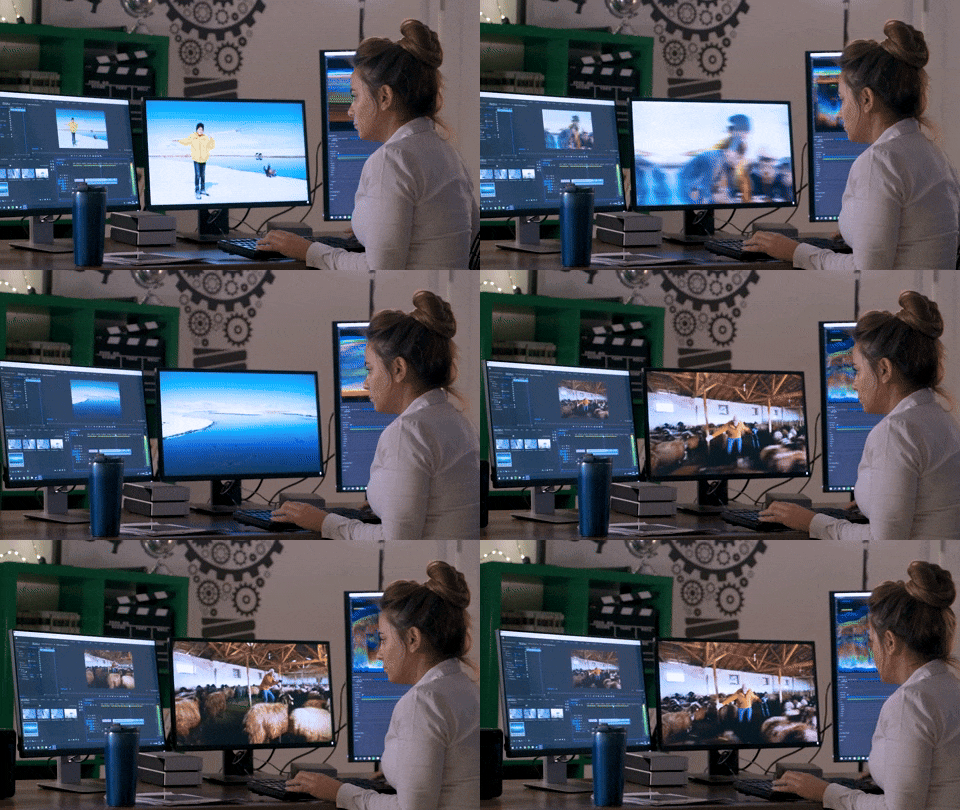
I spent the next several hours running Capcut side-by-side with Camtasia. Editing the same video (this one) to see which tool gave me better results.
That’s where “This is easy” turned into, “WTF?”
Not because Capcut is bad. It’s a perfectly good video editor with some powerful features that aren’t available on Camtasia. However, the things I was looking for—lower thirds, title screens, and masking—aren’t as polished (or as flexible) as what Camtasia offers.
In the end, I spent an entire day learning a new software that turned out to be not as capable as the one I already know how to use.
Shiny objects often mask something else
Growing up, I wanted to be a writer. By age eleven I was reading Stephen King, James Clavell, and James A. Michener. I dreamed of finding fame and fortune as novelist.
One Christmas, I asked for and received an electric typewriter (remember those?), convinced that the only thing standing between me and a career as a writer was a fancy new machine.
A few years later, I decided what I really needed was a word processor. The internet didn’t exist yet, and home computers were rare, but these beefed up typewriters let writers see up to eight lines on their tiny screens, so you could correct your mistakes before committing them to the page. Game changing!
Not long after that, it was a computer that would allow me to finally get the stories out of my head and onto paper.
As you’ve probably guessed, none of these tools made a difference. I never did sit down and write more than a few pages of fiction. The typewriter, word processor, and computer were just sophisticated ways of feeling productive, without ever doing the work required to become a writer for real.
I see this sometimes among solopreneurs. They prioritize new software, buying into the hype of a hot new course platform or shopping cart, but never making use of it. They might spend weeks “getting ready to” publish content, or tweaking a website layout or logo colors. Some even suffer from the product creator’s version of startitis, endlessly starting new courses without ever launching.
What do all of these shiny objects have in common? They’re all forms of procrastination dressed up as productivity. It felt productive for me to unpack a shiny new word processor and learn how it worked. But the real measure of productivity for a writer is how many words you write.
Not all diversions are a waste of time
I wouldn’t say my excursion into Capcut was a complete waste. We’re keeping for other reasons, notably because Rik finds it intuitive and easy to use. That means all Capcut editing is now on his desk, and I’m going back to my tried and true friend, Camtasia. She may not be as young and fashionable, but she gets the job done. Kind of like me, I guess.
But, I want to leave you with this: Next time you’re tempted to dive into something new, ask yourself, “Am I avoiding the real work by embracing a shiny object? Or is this exploration truly a necessary part of my job?”
Give yourself the gift of an honest answer.