

Not long ago, while scrolling through YouTube, I came across this video about a new feature in Notion. If you don’t know, I’ve been using Notion to manage the business off and on for years, and more seriously for the past several months.
I’ve been slowly moving in my SOPs, my content calendar, my notes, my CRM, and I’m happy with the system I’ve built there.
But that video threw a wrench in my plans. It reminded me that most apps prioritize new development. There will always be another new feature to unpack, and that unpacking takes time and energy. As a solopreneur, I have to ask myself, “Is the added effort to learn this new thing really worth it?”
More and more, I’m finding the answer is no.
Just as it’s not my job to learn how to write better AI prompts, it’s also not my job to keep up with the latest innovations in Notion or Descript or any other app that doesn’t have a direct impact on my business growth.
My job is to help you build a better, more sustainable business, and while the trend is to build increasingly complex funnels and workflows using a growing number of tools, I’m finding myself drawn to simpler solutions.
Complicated workflows are beautiful… when they work
I got my first glimpse of an over-engineered system as a virtual assistant working with a business coach. She’d hired an agency to build out an elaborate sales funnel. On paper, it looked great. I was fascinated with the logistics of it.

Facebook ads drove traffic to an automated webinar. A reminder sequence included both email and text messaging. The follow up emails were customized based on how much of the webinar the client had watched, and the offer to book a call was made at precisely the right time, based on when the prospect was most likely to be looking at her email.
Including the tools, copywriting, testing and optimizing, the entire project cost somewhere north of $30,000 to complete. And you know what?
It didn’t work.
Or at least, it worked no better than the much simpler version she had been using:
Facebook ads > automated webinar > follow-up emails > discovery call CTA.
She disabled the complex funnel and never looked back.
You need three systems to run a profitable business
“Everything should be made as simple as possible, but not simpler.”
— Maybe Albert Einstein (or maybe not)
It’s easy to over-engineer your business. I see it every day. I’ve done it myself.
Complex funnels and elaborate plans are nothing more than procrastination dressed up as productivity until you have these three systems in place and optimized:
- Visibility. You need a system for making your audience aware that you exist. A few weeks ago, I sent out a Solopreneur Survey asking where the weakest link is in your business. For most of you, it’s visibility. Not enough people know who you are or how you can help.
- List building. Your audience is scattered all over the globe and probably in several different apps. That’s too random for predictable revenue, which is why you must have a mailing list. Creating a community in email is the easiest, most reliable way to stay in touch and make offers.
- Sales. This is where the money changes hands. It’s where someone who knows who you are and how you can help says, “Yes! I need this!”
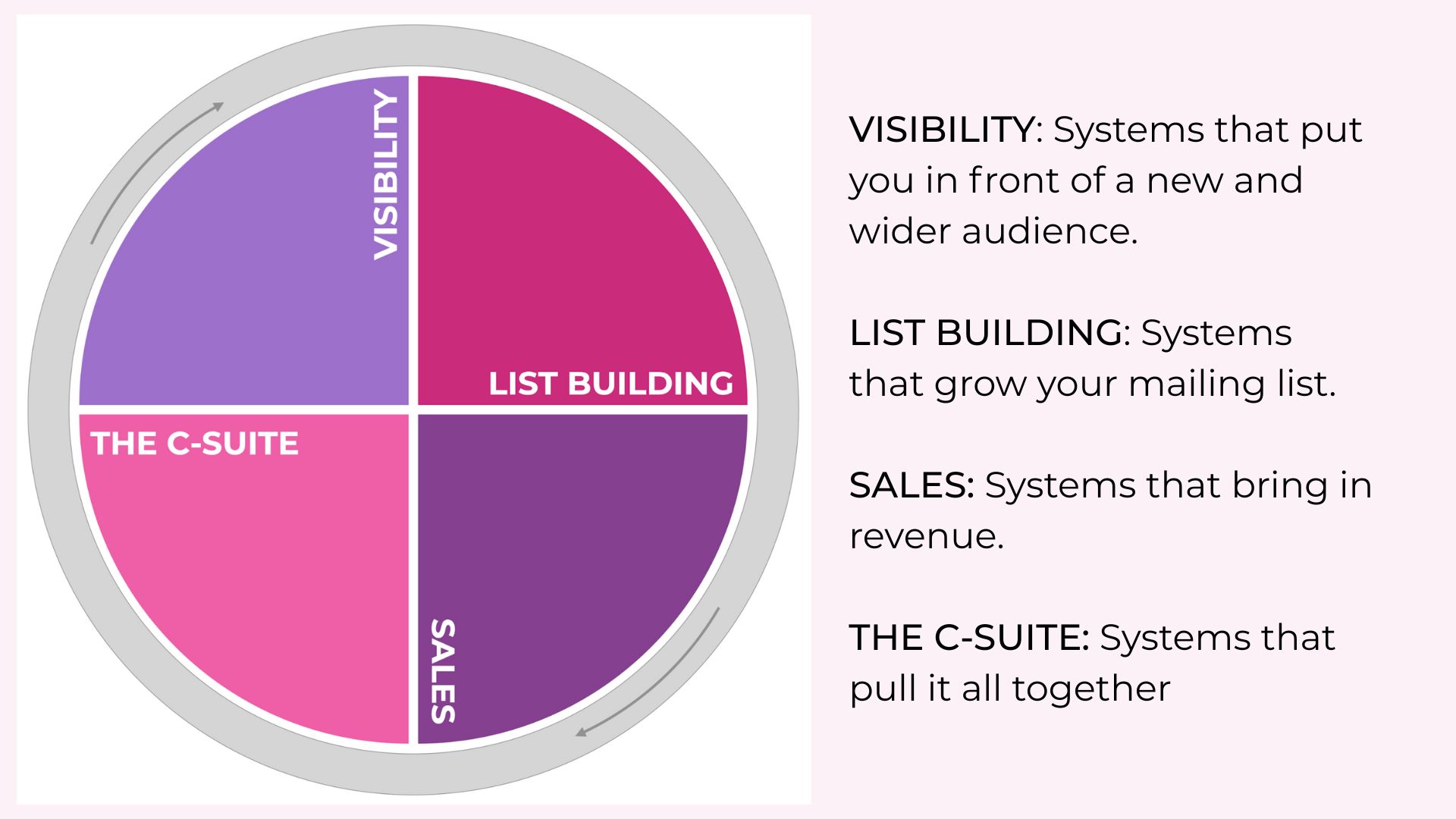
It feels too simple to actually work, I know. But this is exactly how every successful online business operates. They might substitute paid ads for organic social media, or swap out webinars for PDF lead magnets, but the foundation is the same.
How my business runs
Content and collaborations are my visibility engine. I publish this blog/newsletter. I publish content on LinkedIn, and I publish to a YouTube channel. Those are my content platforms.
Collaborations include podcast interviews, bundles and summits, guest blogging, speaking, bonus offers, list swaps, and any other creative ways to share audiences with other business owners.
All content and collaborations have one job: To build my email list. Every CTA on every piece of content leads to an opt-in page, and that opt-in page leads to a simple welcome sequence—not to a multi-phase funnel with text messages and phone calls and mail drops courtesy of a Snowy Owl named Hedwig.
The welcome sequence is five emails, and is delivered over a week. It has one call to action: to join Six-Figure Systems. That’s the sales system at work.
Once subscribers are through the welcome sequence, they’re added to my newsletter list, where they receive two or three emails per week: the newsletter (on Tuesdays), the Saturday Skimmable edition, and perhaps one other sales email if I find something I think they should know about.
That’s it. The entire business model laid out in five paragraphs.
But what about…?
When I present this to clients, their first instinct is often to add things. They want to know about:
- Chat bots
- Forums
- Substacks
- Carousels
- Engagement triggers
And a dozen other strategies they see promoted (usually by someone selling a course about it). My response is always the same.
All of those tactics might have a place in your business, but until you have the core systems nailed down and optimized, they are a distraction.
If your visibility system is not working to build your email list, adding a chat bot or a new Substack isn’t the solution. It will only add more work to your plate, and give you less time to fix the broken visibility system. Likewise, if your email list doesn’t convert into sales, making your funnel more complex is not the answer. Fixing your offer is.
When should you add?
Eventually, if you want your business to grow, you will have to add something. Another content channel, more offers, better visibility options… something.
Staying in one place is how you become stagnant, but trying to do too much, too soon is how you burn out. Where’s the balance?
My rule of thumb is this:
When my current systems are fully optimized and automated, and I’ve reduced my workload as much as possible while also maximizing my return, then I will consider adding something new.
Here’s an example.
I have a brand new baby YouTube channel. As a solopreneur, I do all my own writing, recording, and editing. I’m fine with that (don’t send me editing proposals, please), but it takes me at least one full workday. Adding anything else to my schedule right now would just overload me.
Of course, I’ll get faster at it. Over the next few weeks, my YouTube time commitment will drop from a full day to half a day or less, leaving time to potentially add something new to my systems.
Faster isn’t the only metric to consider though. There’s also better.
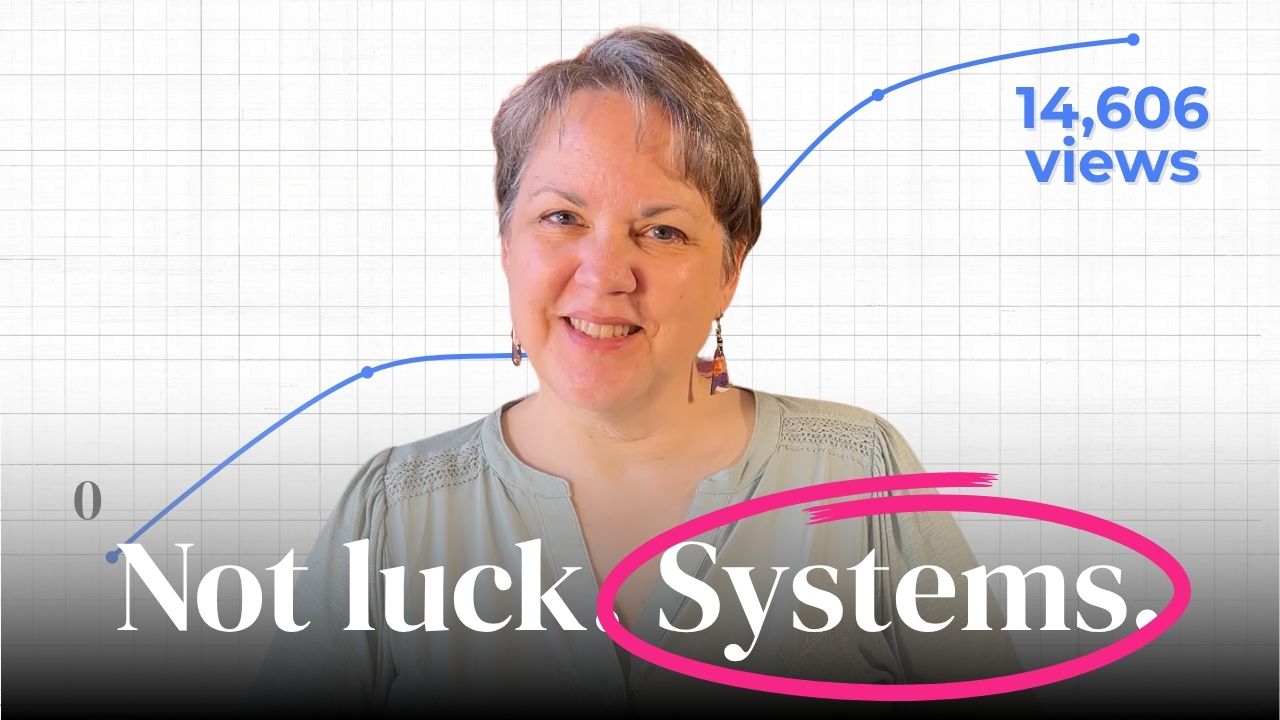
Right now my channel is enjoying some pretty amazing numbers, but there is always room for improvement. I don’t yet understand the nuances of the algorithm, or how to craft a more compelling hook, or how to merge entertaining with informative in a way that makes viewers stick. I’m sure my click through rates could be improved, my watch time could be longer, and my engagement rates higher.
Before I go off in search of a shiny new thing to add, I’ll make sure I get everything I can from this existing system. Only then will I start to think about something else.
I opted out
I didn’t finish watching the YouTube video, and I didn’t implement the new dashboard feature. I had more important things to do—like creating content and making sales.
It’s easy to mistake “tinkering” for “progress.” But progress in a solopreneur business is measured by conversions, not by busywork and the complexity of your systems.
I’m sticking with my simple SOPs and my five-email welcome sequence. They might not be as fascinating as a $30,000 automated funnel, but they have one distinct advantage:
They work. And they leave me with plenty of space for what I actually signed up for, which is less work and more free time.